
Hindman Ranch
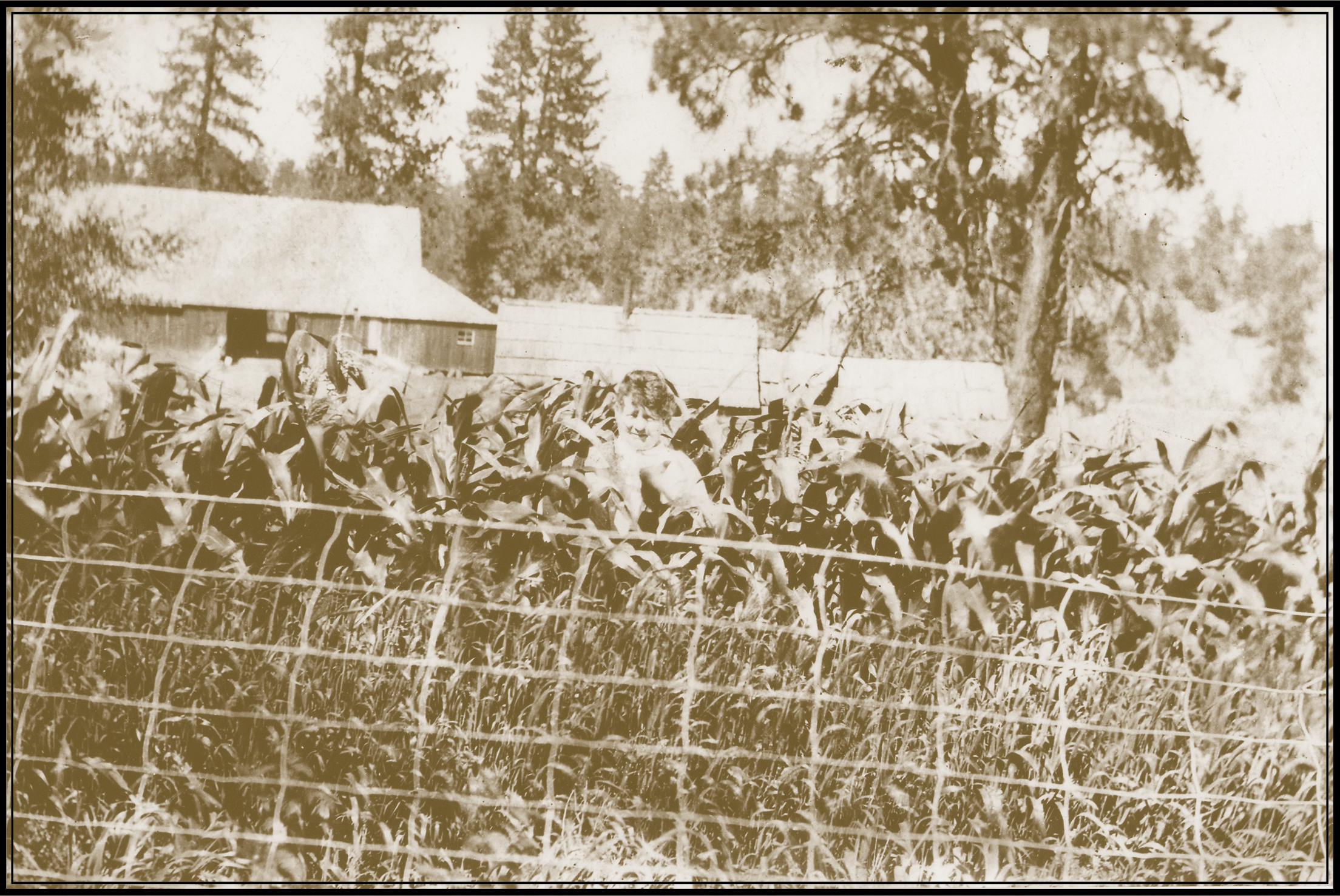
In 1865, a company of the First Oregon Infantry Regiment deployed to Sisters Country across the Santiam Wagon Road to protect settlers from Northern Paiute attacks. They erected Camp Polk, named for the county of origin for most of them, in the upper portion of the spring- fed meadow. They built eight cabins, which they abandoned the next spring without having seen a native American.
Samuel Hindman, born in Pennsylvania in 1823, was hired as station master for the Santiam Wagon Road Company in 1868. He paid a recorded $400 for 160 acres (significantly more than the $1.25 per acre typically paid for homesteads) at Camp Polk and built a house and a large barn. He was joined by his wife and sons in 1870, and they ran a travelers' waystation, likely using the abandoned cabins. Other cabins served as a store and, beginning in 1875, the Camp Polk Post Office.
The land was covered by bunch grasses and yellow pines, valuable for grazing and timber. Whychus Creek provided water for the pasture, but the meadow was too wet for farming. In 1871, son Charley dug ditches to divert water from Indian Ford Creek (then Big Slough or Swamp Creek) to grow hay, grains, and vegetables in the drier areas, while grazing livestock on adjacent public land. Samuel continued doing road work, including on the Hindman Toll (later Lower) Bridge over the Deschutes River. By 1883, 120 acres along Wychus Creek had been added to the ranch. Samuel's wife died in 1884, and the Camp Polk store closed the next year. He remarried in 1887 and moved to Lebanon, Oregon, while sons Daniel and Charley managed the ranch. In 1888, the Camp Polk Post Office was replaced by Sisters Post Office on the McKenzie Wagon Road, and in 1891, after a bridge was built over Whychus Creek just east of Sisters, the route through Camp Polk became obsolete.
In 1902, Charley married Martha Cobb. Samuel died in 1920, and Charley died six months later. Martha married a hired hand, Gustav Olson, and her son Newt managed the ranch, growing hay in the meadow and gathering up to 400 head of cattle and horses each spring. Duckett & Spoo ran their sawmill on the ranch. Martha moved to Prineville where she lived until her death in 1940, and was buried next to her first husband, Alfred Cobb, in the Camp Polk Cemetery. Later owners also logged and raised livestock and crops. The barn was listed as a Deschutes County historic site in 1979. In 2000, Deschutes Land Trust bought the ranch and has since stabilized the barn and restored the meadow.